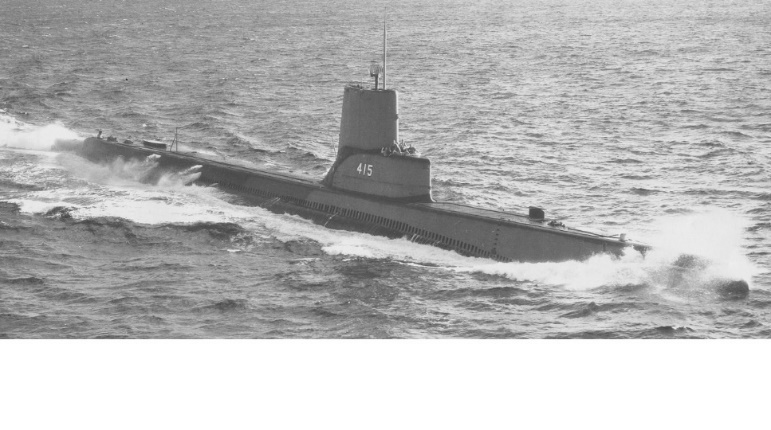
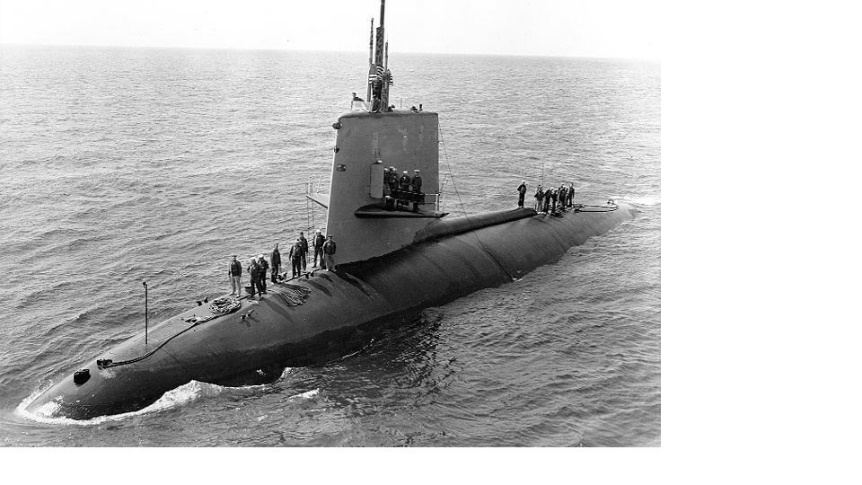
Hull Number: SS-415
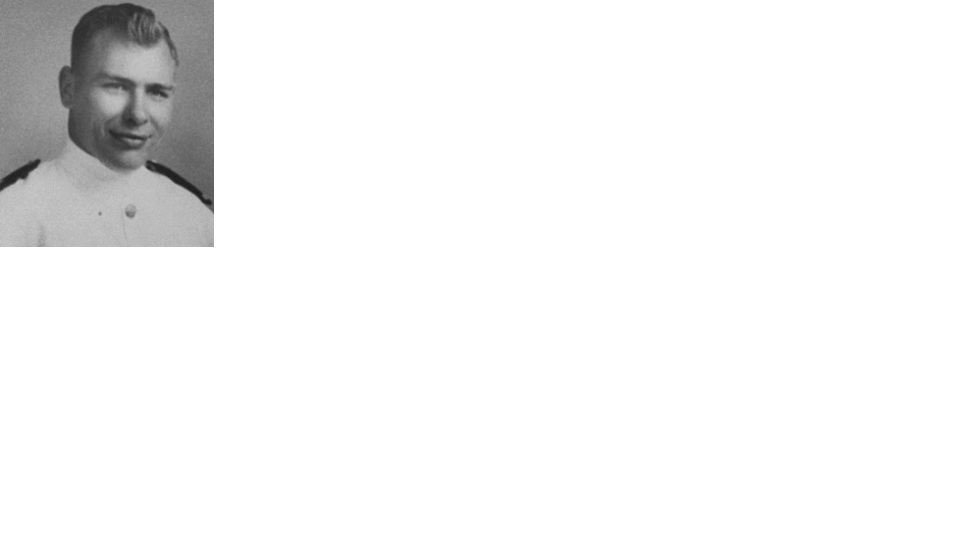
Last Captain: LCDR Quinly R. “Dutch” Schulz
Date Lost: 29 May, 1958
Location: Operations area near Hawaii
Cause: Collision
Construction
Stickleback was a Balao class submarine completed in March of 1945 by the Mare Island Naval Shipyard in Vallejo, CA.
Loss Narrative
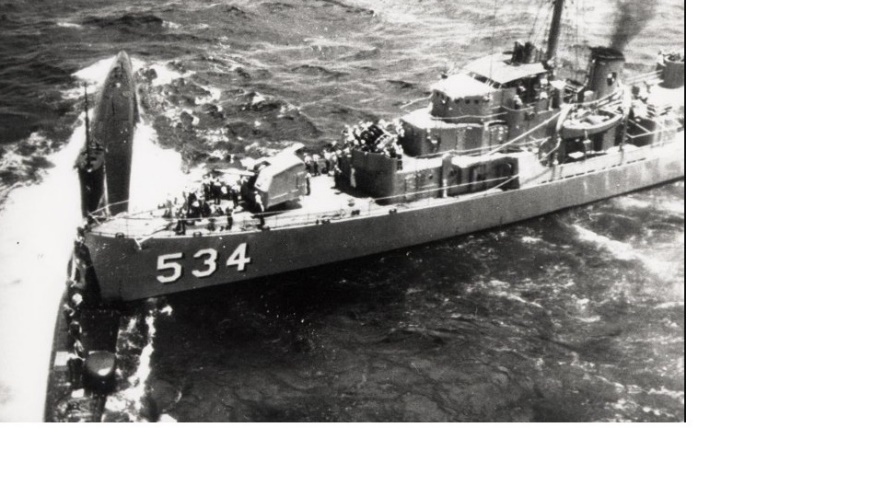
On 28 May 1958, Stickleback was participating in ASW exercises with the destroyer escort Silverstein. Exercises continued into the next afternoon. When going to a safe depth, Stickleback lost power and, with it, depth control. She broached the surface just 200 yards ahead of the speeding USS Silverstein (DE-534). Although the escort had backed full and put her rudder hard left, she hit Stickleback near the bulkhead between the control room and forward battery. Although attempts were made to keep Stickleback afloat, they were futile. However, they were effective enough to allow all of the 82-man crew to escape.
Prior History
Stickleback completed initial outfitting on 26 May, 1945. She then held her shakedown cruise off the California coast. She reported to Pearl Harbor on 21 June to have more equipment installed. She sailed to Guam, arriving there on 2 August. She began her only war patrol on 6 August. Stickleback had only been in the Sea of Japan for two days when the war ended. On 21 August, she picked up 19 survivors from a Japanese ship sunk earlier by the USS Jallao (SS-368). After providing food, water and medical treatment, the Japanese were set afloat again near one of their home islands.
Stickleback returned to Guam on 9 September and to San Francisco on 28 September 1945. She was decommissioned on 26 June 1946. She was one of more than 30 WW2 submarines decommissioned that year, some of which would be brought back into service for the Korean Conflict. Stickleback was recommissioned on 6 September 1951 for use as a training boat off San Diego. On 14 November 1952, she was decommissioned again, this time for conversion to a GUPPY 2A submarine.
Stickleback was recommissioned on 26 June 1953. Her conversion to GUPPY 2A was completed on 9 September. She had been reassigned to Submarine Squadron 7 and headed to Pearl Harbor on 16 September 1953. The boat conducted drills and exercises there until departing for Yokosuka, Japan on 5 January 1954. Stickleback arrived at her new home on 19 January.
Stickleback began her first Cold War patrol on 29 March 1954. The patrol lasted four weeks. She made contact with Soviet ships and photographed them. She returned to Pearl Harbor on 2 July and conducted training exercises in the Hawaiian Islands for the next year.
On 27 July 1955, Stickleback left Pearl Harbor on her second Cold War patrol. The patrol included reconnaissance in the shipping lane between Cape Chaplino, Soviet Union and the Bearing Strait. Beginning on 18 August, Stickleback sighted and photographed Soviet cruisers, naval auxiliary ships, twelve submarines, twelve submarine chasers and a submarine tender. She completed her patrol and set course for Pearl Harbor, arriving on 19 September. Overall, Stickleback made contact with 149 Soviet ships, including 55 naval vessels, during the nearly two-month patrol.
After a routine overhaul Stickleback had a month of training before returning to Yokosuka on 9 March 1956. She deployed on her third Cold War patrol on 10 May 1956. On 23 May, Stickleback detected and recorded multiple underwater explosions. The same day she sighted Soviet hydrographic research vessels, which led her to conclude that the explosions were likely related to hydrographic experimentation. However, she could not get closer to investigate. She ended the patrol in Yokosuka on 1 June.
Rather than returning to Pearl Harbor, Stickleback remained in Yokosuka. She left for her fourth Cold War patrol on 24 August 1956, assigned to the shipping lanes off Petropavlovsk, Soviet Union. Over the next several weeks, she photographed and collected sonar information on 119 Soviet vessels. She ended the patrol and moored at Pearl Harbor on 10 October.
On 6 June 1957, Stickleback left for her fifth Cold War patrol. During this patrol, she returned to the Siberian coast and patrolled the shipping lanes between Petropavlovsk and Provideniya, Soviet Union. During this brief patrol, the submarine collected intelligence information on 40 Soviet ships before returning to Pearl Harbor on 26 July. She then conducted local training operations there until she was lost in May of 1958.
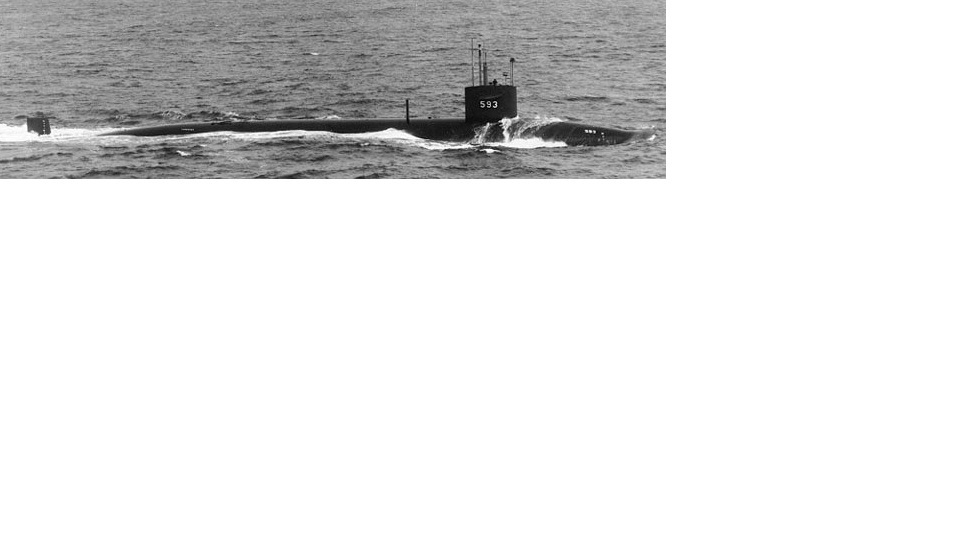
USS Thresher (SSN-593).
Thresher was completed in August of 1961 by the Portsmouth Naval Shipyard in Kittery, Maine. Thresher was the lead boat of its class. However, after its loss, the class was renamed after the second boat, the USS Permit (SSN-594).
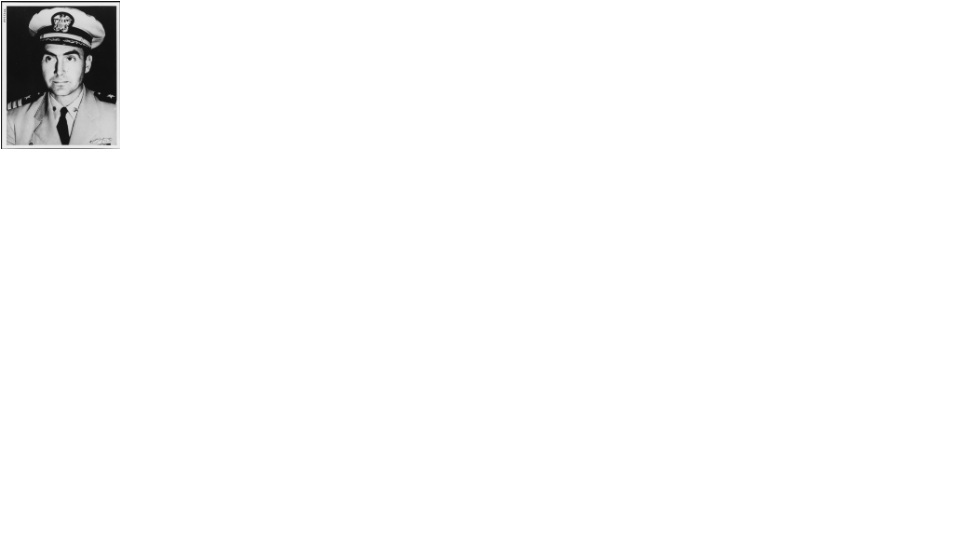
Last captain: LCDR John Wesley Harvey.
Date lost: 10 April 1963.
Location: 220 miles east of Cape Cod, MA.
Fatalities: 127.
This includes on-board observers and shipyard workers.
Cause: Uncertain.
On 9 April 1963, Thresher left the Portsmouth Naval Shipyard to meet with the submarine rescue ship USS Skylark (ASR-20). She did an initial trim dive and then gradually dove to 650 feet, half her test depth. She would then remain submerged for the evening. She contacted Skylark the next morning to conduct deep dive testing.
Thresher dove deeper in 100-foot increments, testing all systems at each depth. She was operating in circles to remain close to Skylark. Thresher reported her course as 090 and her depth as 1,000 feet. Communications begin to deteriorate, perhaps due to a thermocline.
As Thresher neared her test depth of 1,300 feet, Skylark received a garbled message indicating “minor difficulties, have positive up angle, attempting to blow.” A later, even more garbled message, included the phrase “900 N”. There were multiple possible meanings to the phrase, and it is unclear which Thresher meant. There were no further communications from the boat.
Thresher lies on the ocean floor at a depth of about 8,000 feet. By 22 July 1963, the boat had been located and photographed.
Prior History:
In 1961-62, Thresher conducted lengthy sea trials to test new systems and weapons. In November of 1961, she was in San Juan, Puerto Rico. She was accompanied by the diesel boat USS Cavalla (SS-244). Per the usual procedure, Thresher shut down her reactor while in port. Her diesel engine and generator provided the power for the ship. Several hours later, the backup generator failed, and the electrical load was shifted to the battery. Lighting and air conditioning were shut down to preserve enough power in the battery to restart the reactor. After about 10 hours in this configuration, the temperature in the boat reached 140 degrees. When it became apparent that the battery would run too low, the crew tried to restart the reactor. However, that failed when there was not enough power left in the battery. The crew then had to borrow cables from another ship. Cavalla started her diesels and provided enough power to Thresher to restart the reactor.
Thresher spent much of early 1962 evaluating systems. She took part in various exercises. She went to Port Canaveral, FL, for SUBROC tests. While there, she was hit by a tug which damaged a ballast tank. Repairs were completed by the Electric Boat Company in Connecticut. More tests followed.
On 16 July 1962, Thresher entered the Portsmouth Naval Shipyard for a scheduled post shakedown overhaul. However, as frequently happens with a first-in-the-class boat, this took longer than expected. It wasn’t until 8 April 1963 that Thresher was recertified and undocked. Next were the post-overhaul trials during which she was lost.
Analysis of the Cause:
The latest analysis indicates it was likely that a circuit failure led to a reactor shutdown. Ice in the emergency ballast blow system then prevented Thresher from getting to the surface. The prior theory was that the initial event was the failure of a silver brazed weld that caused electrical failures and the reactor shutdown. However, SOSUS did not pick up any flooding noises. Other submarines have had silver-brazed welds fail without catastrophic results.
Tests on another submarine of the class, while moored at a dock, confirmed the problem with ice in the emergency blow system. The strainers, which should have been removed on Thresher, almost certainly did ice over. That prevented the emergency blow system from functioning and doomed the Thresher.
Notes:
During the 1963 inquiry, Admiral Hyman Rickover stated:
“I believe the loss of the Thresher should not be viewed solely as the result of failure of a specific braze, weld, system or component, but rather should be considered a consequence of the philosophy of design, construction and inspection that has been permitted in our naval shipbuilding programs. I think it is important that we re-evaluate our present practices where, in the desire to make advancements, we may have forsaken the fundamentals of good engineering.” (Cited in the Wikipedia Thresher entry)
As part of the changes due to the loss of Thresher, the SUBSAFE program was developed to enhance safety. All nuclear-powered submarines were to go through the program. The only submarine we have lost since then, the USS Scorpion (SSN-589), had not yet gone through the program.
Surveys indicate that the nuclear fuel on Thresher is intact. There is no significant effect on the environment.
In the late 60s, Robert Ballard, a Commander in the U. S. Navy Reserves, reached an agreement with the Navy. The Navy would fund the surveys of the Thresher and Scorpion. The Navy also provided the deep submersible Alvin. Ballard could then use the Alvin to search for the Titanic, as long as the other surveys were completed first.
USS Scorpion (SSN-589).
Scorpion was a Skipjack class nuclear powered submarine completed in July of 1960 by General Dynamics Electric Boat in Groton, CT.
Last captain: CDR Francis Slattery.
Date lost: 22 May 1968.
Location: 400 nautical miles southwest of the Azores.
Fatalities: 99.
Cause: Uncertain.
After her abbreviated overhaul in 1967, Scorpion had her emergency ballast tank blow system tagged out as unusable. Her speed was not limited, but she was conservatively limiting her depth to 500 feet. However, she still got underway for a Mediterranean deployment on 15 February 1968. She operated with the 6th Fleet into May of that year. During the deployment, Scorpion suffered various equipment failures and chronic problems.
On 16 May, after departing the Mediterranean, Scorpion stopped at Rota, Spain to drop off two crew members. One was ill and the other had a family emergency. On her departure, Scorpion likely provided noise cover or interference for one of our missile submarines operating from Rota. Those departures were often monitored by Soviet trawlers or submarines trying to track our missile boats.
Scorpion was then directed to observe Soviet naval activities near the Azores on her way home. After observing the Soviets, Scorpion had problems getting a message out to the base in Rota, to be forwarded to SUBLANT. She was finally able to get the message out via a base in Greece. Just after midnight on 21 May 1968, Scorpion reported that she was running at 15 knots at a depth of 350 feet. She was due to return home to Norfolk at 13:00 on 27 May.
On 27 May, when Scorpion was a few hours overdue, the Navy a began a search along the route she would have taken to Norfolk. She was declared “presumed lost” on 5 June 1968. Aided by SOFAR and AFTAC recordings, Scorpion was located a couple months later. (SOSUS was of no help in the acoustic search.) Scorpion lies on the bottom, in almost 10,000 feet of water. The wreck was photographed by the end of October of 1968.
The cause of the loss of Scorpion cannot yet be definitely determined and may never be known. The most likely cause now appears to be a hydrogen explosion in the boat’s battery.
Prior History:
After commissioning, Scorpion left New London on 24 August 1960 for a two-month European deployment. She operated with our 6th Fleet and NATO navies. She returned in October and trained along the East Coast until May of 1961.
In September of 1961, she changed home port to Norfolk, VA. Scorpion specialized in developing tactics. From June of 1963 to May of 1964, she was in Charleston, SC for an overhaul. She then completed a transatlantic patrol. In the spring of 1965, she completed a similar patrol in European waters.
In 1966, she took part in special operations. On this deployment, Scorpion is said to have entered a Soviet inland sea and filmed a missile launch. The captain and crew received many awards and commendations.
On 1 February 1967, Scorpion entered the Norfolk Naval Shipyard for an overhaul and a nuclear refueling. Scorpion needed a complete overhaul. That would have included the SUBSAFE modifications which would have extended the shipyard time to as much as 36 months. However, operational requirements could not afford to have Scorpion off-line for that long. Operational requirements led to delays on all SUBSAFE overhauls. As a result, the Chief of Naval Operations had already approved the reduced scope for Scorpion’s overhaul back on 17 June 1966.
Analysis of the Cause:
There have been various theories as to the cause of the loss of Scorpion. One of the initial estimates was that one of Scorpion’s Mark 37 electric torpedoes experienced a battery fire and that caused a torpedo explosion. However, the lack of a bubble pulse from an explosion, along with the lack of visible damage to Scorpion, doesn’t support this theory. In addition, it was difficult to simulate the recorded sounds with explosives during testing. This led even the supporters of the exploding torpedo theory to doubt this possibility.
Another theory is that the Soviets torpedoed Scorpion in retaliation for what they believed was our sinking of their submarine K-129. The damage and the lack of a bubble pulse do not support this theory either. The difficulty in simulating the acoustic signal also casts doubt on this theory. SOSUS tells us she was no longer near any Soviet ships when she went down.
We may never know for certain why the Scorpion was lost. However, Bruce Rule’s book lays out the acoustic evidence that supports a battery explosion as the most likely cause. He states that such an explosion would have killed everyone on the submarine. (However, there are indications that a few of the engineers in the after section of the boat may have survived and tried to use the escape trunk.) Scorpion would then have descended below crush depth and imploded. RADM Dave Oliver, in his book “Against the Tide”, supports this theory by his experience. Under certain conditions during a battery charge, ventilation in the battery well is restricted. If this is near the end of the charge, when the most hydrogen is generated, the concentration of that gas can quickly rise to dangerous levels. It is also noteworthy that battery charging procedures were changed after the loss of Scorpion.
Surveys indicate that the nuclear fuel on Scorpion is intact. There is no significant effect on the environment.
Stickleback returned to Guam on 9 September and to San Francisco on 28 September 1945. She was decommissioned on 26 June 1946. She was one of more than 30 WW2 submarines decommissioned that year, some of which would be brought back into service for the Korean Conflict. Stickleback was recommissioned on 6 September 1951 for use as a training boat off San Diego. On 14 November 1952, she was decommissioned again, this time for conversion to a GUPPY 2A submarine.
Stickleback was recommissioned on 26 June 1953. Her conversion to GUPPY 2A was completed on 9 September. She had been reassigned to Submarine Squadron 7 and headed to Pearl Harbor on 16 September 1953. The boat conducted drills and exercises there until departing for Yokosuka, Japan on 5 January 1954. Stickleback arrived at her new home on 19 January.
Stickleback began her first Cold War patrol on 29 March 1954. The patrol lasted four weeks. She made contact with Soviet ships and photographed them. She returned to Pearl Harbor on 2 July and conducted training exercises in the Hawaiian Islands for the next year.
On 27 July 1955, Stickleback left Pearl Harbor on her second Cold War patrol. The patrol included reconnaissance in the shipping lane between Cape Chaplino, Soviet Union and the Bearing Strait. Beginning on 18 August, Stickleback sighted and photographed Soviet cruisers, naval auxiliary ships, twelve submarines, twelve submarine chasers and a submarine tender. She completed her patrol and set course for Pearl Harbor, arriving on 19 September. Overall, Stickleback made contact with 149 Soviet ships, including 55 naval vessels, during the nearly two-month patrol.
After a routine overhaul Stickleback had a month of training before returning to Yokosuka on 9 March 1956. She deployed on her third Cold War patrol on 10 May 1956. On 23 May, Stickleback detected and recorded multiple underwater explosions. The same day she sighted Soviet hydrographic research vessels, which led her to conclude that the explosions were likely related to hydrographic experimentation. However, she could not get closer to investigate. She ended the patrol in Yokosuka on 1 June.
Rather than returning to Pearl Harbor, Stickleback remained in Yokosuka. She left for her fourth Cold War patrol on 24 August 1956, assigned to the shipping lanes off Petropavlovsk, Soviet Union. Over the next several weeks, she photographed and collected sonar information on 119 Soviet vessels. She ended the patrol and moored at Pearl Harbor on 10 October.
On 6 June 1957, Stickleback left for her fifth Cold War patrol. During this patrol, she returned to the Siberian coast and patrolled the shipping lanes between Petropavlovsk and Provideniya, Soviet Union. During this brief patrol, the submarine collected intelligence information on 40 Soviet ships before returning to Pearl Harbor on 26 July. She then conducted local training operations there until she was lost in May of 1958.
USS Thresher (SSN-593).
Thresher was completed in August of 1961 by the Portsmouth Naval Shipyard in Kittery, Maine. Thresher was the lead boat of its class. However, after its loss, the class was renamed after the second boat, the USS Permit (SSN-594).
Last captain: LCDR John Wesley Harvey.
Date lost: 10 April 1963.
Location: 220 miles east of Cape Cod, MA.
Fatalities: 127.
This includes on-board observers and shipyard workers.
Cause: Uncertain.
On 9 April 1963, Thresher left the Portsmouth Naval Shipyard to meet with the submarine rescue ship USS Skylark (ASR-20). She did an initial trim dive and then gradually dove to 650 feet, half her test depth. She would then remain submerged for the evening. She contacted Skylark the next morning to conduct deep dive testing.
Thresher dove deeper in 100-foot increments, testing all systems at each depth. She was operating in circles to remain close to Skylark. Thresher reported her course as 090 and her depth as 1,000 feet. Communications begin to deteriorate, perhaps due to a thermocline.
As Thresher neared her test depth of 1,300 feet, Skylark received a garbled message indicating “minor difficulties, have positive up angle, attempting to blow.” A later, even more garbled message, included the phrase “900 N”. There were multiple possible meanings to the phrase, and it is unclear which Thresher meant. There were no further communications from the boat.
Thresher lies on the ocean floor at a depth of about 8,000 feet. By 22 July 1963, the boat had been located and photographed.
Prior History:
In 1961-62, Thresher conducted lengthy sea trials to test new systems and weapons. In November of 1961, she was in San Juan, Puerto Rico. She was accompanied by the diesel boat USS Cavalla (SS-244). Per the usual procedure, Thresher shut down her reactor while in port. Her diesel engine and generator provided the power for the ship. Several hours later, the backup generator failed, and the electrical load was shifted to the battery. Lighting and air conditioning were shut down to preserve enough power in the battery to restart the reactor. After about 10 hours in this configuration, the temperature in the boat reached 140 degrees. When it became apparent that the battery would run too low, the crew tried to restart the reactor. However, that failed when there was not enough power left in the battery. The crew then had to borrow cables from another ship. Cavalla started her diesels and provided enough power to Thresher to restart the reactor.
Thresher spent much of early 1962 evaluating systems. She took part in various exercises. She went to Port Canaveral, FL, for SUBROC tests. While there, she was hit by a tug which damaged a ballast tank. Repairs were completed by the Electric Boat Company in Connecticut. More tests followed.
On 16 July 1962, Thresher entered the Portsmouth Naval Shipyard for a scheduled post shakedown overhaul. However, as frequently happens with a first-in-the-class boat, this took longer than expected. It wasn’t until 8 April 1963 that Thresher was recertified and undocked. Next were the post-overhaul trials during which she was lost.
Analysis of the Cause:
The latest analysis indicates it was likely that a circuit failure led to a reactor shutdown. Ice in the emergency ballast blow system then prevented Thresher from getting to the surface. The prior theory was that the initial event was the failure of a silver brazed weld that caused electrical failures and the reactor shutdown. However, SOSUS did not pick up any flooding noises. Other submarines have had silver-brazed welds fail without catastrophic results.
Tests on another submarine of the class, while moored at a dock, confirmed the problem with ice in the emergency blow system. The strainers, which should have been removed on Thresher, almost certainly did ice over. That prevented the emergency blow system from functioning and doomed the Thresher.
Notes:
During the 1963 inquiry, Admiral Hyman Rickover stated:
“I believe the loss of the Thresher should not be viewed solely as the result of failure of a specific braze, weld, system or component, but rather should be considered a consequence of the philosophy of design, construction and inspection that has been permitted in our naval shipbuilding programs. I think it is important that we re-evaluate our present practices where, in the desire to make advancements, we may have forsaken the fundamentals of good engineering.” (Cited in the Wikipedia Thresher entry)
As part of the changes due to the loss of Thresher, the SUBSAFE program was developed to enhance safety. All nuclear-powered submarines were to go through the program. The only submarine we have lost since then, the USS Scorpion (SSN-589), had not yet gone through the program.
Surveys indicate that the nuclear fuel on Thresher is intact. There is no significant effect on the environment.
In the late 60s, Robert Ballard, a Commander in the U. S. Navy Reserves, reached an agreement with the Navy. The Navy would fund the surveys of the Thresher and Scorpion. The Navy also provided the deep submersible Alvin. Ballard could then use the Alvin to search for the Titanic, as long as the other surveys were completed first.
USS Scorpion (SSN-589).
Scorpion was a Skipjack class nuclear powered submarine completed in July of 1960 by General Dynamics Electric Boat in Groton, CT.
Last captain: CDR Francis Slattery.
Date lost: 22 May 1968.
Location: 400 nautical miles southwest of the Azores.
Fatalities: 99.
Cause: Uncertain.
After her abbreviated overhaul in 1967, Scorpion had her emergency ballast tank blow system tagged out as unusable. Her speed was not limited, but she was conservatively limiting her depth to 500 feet. However, she still got underway for a Mediterranean deployment on 15 February 1968. She operated with the 6th Fleet into May of that year. During the deployment, Scorpion suffered various equipment failures and chronic problems.
On 16 May, after departing the Mediterranean, Scorpion stopped at Rota, Spain to drop off two crew members. One was ill and the other had a family emergency. On her departure, Scorpion likely provided noise cover or interference for one of our missile submarines operating from Rota. Those departures were often monitored by Soviet trawlers or submarines trying to track our missile boats.
Scorpion was then directed to observe Soviet naval activities near the Azores on her way home. After observing the Soviets, Scorpion had problems getting a message out to the base in Rota, to be forwarded to SUBLANT. She was finally able to get the message out via a base in Greece. Just after midnight on 21 May 1968, Scorpion reported that she was running at 15 knots at a depth of 350 feet. She was due to return home to Norfolk at 13:00 on 27 May.
On 27 May, when Scorpion was a few hours overdue, the Navy a began a search along the route she would have taken to Norfolk. She was declared “presumed lost” on 5 June 1968. Aided by SOFAR and AFTAC recordings, Scorpion was located a couple months later. (SOSUS was of no help in the acoustic search.) Scorpion lies on the bottom, in almost 10,000 feet of water. The wreck was photographed by the end of October of 1968.
The cause of the loss of Scorpion cannot yet be definitely determined and may never be known. The most likely cause now appears to be a hydrogen explosion in the boat’s battery.
Prior History:
After commissioning, Scorpion left New London on 24 August 1960 for a two-month European deployment. She operated with our 6th Fleet and NATO navies. She returned in October and trained along the East Coast until May of 1961.
In September of 1961, she changed home port to Norfolk, VA. Scorpion specialized in developing tactics. From June of 1963 to May of 1964, she was in Charleston, SC for an overhaul. She then completed a transatlantic patrol. In the spring of 1965, she completed a similar patrol in European waters.
In 1966, she took part in special operations. On this deployment, Scorpion is said to have entered a Soviet inland sea and filmed a missile launch. The captain and crew received many awards and commendations.
On 1 February 1967, Scorpion entered the Norfolk Naval Shipyard for an overhaul and a nuclear refueling. Scorpion needed a complete overhaul. That would have included the SUBSAFE modifications which would have extended the shipyard time to as much as 36 months. However, operational requirements could not afford to have Scorpion off-line for that long. Operational requirements led to delays on all SUBSAFE overhauls. As a result, the Chief of Naval Operations had already approved the reduced scope for Scorpion’s overhaul back on 17 June 1966.
Analysis of the Cause:
There have been various theories as to the cause of the loss of Scorpion. One of the initial estimates was that one of Scorpion’s Mark 37 electric torpedoes experienced a battery fire and that caused a torpedo explosion. However, the lack of a bubble pulse from an explosion, along with the lack of visible damage to Scorpion, doesn’t support this theory. In addition, it was difficult to simulate the recorded sounds with explosives during testing. This led even the supporters of the exploding torpedo theory to doubt this possibility.
Another theory is that the Soviets torpedoed Scorpion in retaliation for what they believed was our sinking of their submarine K-129. The damage and the lack of a bubble pulse do not support this theory either. The difficulty in simulating the acoustic signal also casts doubt on this theory. SOSUS tells us she was no longer near any Soviet ships when she went down.
We may never know for certain why the Scorpion was lost. However, Bruce Rule’s book lays out the acoustic evidence that supports a battery explosion as the most likely cause. He states that such an explosion would have killed everyone on the submarine. (However, there are indications that a few of the engineers in the after section of the boat may have survived and tried to use the escape trunk.) Scorpion would then have descended below crush depth and imploded. RADM Dave Oliver, in his book “Against the Tide”, supports this theory by his experience. Under certain conditions during a battery charge, ventilation in the battery well is restricted. If this is near the end of the charge, when the most hydrogen is generated, the concentration of that gas can quickly rise to dangerous levels. It is also noteworthy that battery charging procedures were changed after the loss of Scorpion.
Surveys indicate that the nuclear fuel on Scorpion is intact. There is no significant effect on the environment.
Submarine Photo
Captain Photo

LCDR Quinly R. “Dutch” Schulz