Hull Number: SS-306
Last Captain: CDR Richard (Dick) O’Kane
Date Lost: 24 October 1944
Location: Luzon Strait
Fatalities: Fatalities: 78. Nine survived.
Cause: Own torpedo
Construction
Tang was a Balao class submarine completed by the Mare Island Naval Shipyard at Vallejo, CA in October of 1943.
Loss Narrative
Tang’s fifth war patrol began on 24 September 1944 from Pearl Harbor. She left Midway after a fuel stop and on 27 September headed to the Luzon Strait. On 10 October, Tang sank a small freighter and another the next day. On 23 October, Tang found a large convoy and, in a night surface attack, sank at least three ships. The Japanese lost another ship in the attack on the convoy but, for some reason, JANAC did not credit that to Tang. The next day, Tang found another convoy and sank two large tankers. Four more large vessels were claimed as sunk, but were not credited.
The last torpedo fired in this attack, the last torpedo Tang had on board, was a circular run. Tang recognized the circular run and turned hard to avoid it. However, she could not turn quickly enough and the torpedo hit in the after torpedo room. The boat sank quickly in 180 feet of water with the stern on the bottom and the bow out of the water. Three men on the bridge swam free and one from the conning tower managed to get out as well. The survivors inside the boat opened the forward ballast tank vents to put the boat level on the bottom. Although 13 men were then able to get out through the forward escape trunk, only five survived and were picked up. The nine sailors swam long enough to be picked up by the Japanese and survived the war.
The escort ship that picked up the Tang survivors had also picked up survivors from the ships that the boat had sunk. O’Kane stated “When we realized that our clubbings and kickings were being administered by the burnt, mutilated survivors of our own handiwork, we found we could take it with less prejudice.” O’Kane weighed just 88 pounds when the war ended.
The last torpedo fired in this attack, the last torpedo Tang had on board, was a circular run. Tang recognized the circular run and turned hard to avoid it. However, she could not turn quickly enough and the torpedo hit in the after torpedo room. The boat sank quickly in 180 feet of water with the stern on the bottom and the bow out of the water. Three men on the bridge swam free and one from the conning tower managed to get out as well. The survivors inside the boat opened the forward ballast tank vents to put the boat level on the bottom. Although 13 men were then able to get out through the forward escape trunk, only five survived and were picked up. The nine sailors swam long enough to be picked up by the Japanese and survived the war.
The escort ship that picked up the Tang survivors had also picked up survivors from the ships that the boat had sunk. O’Kane stated “When we realized that our clubbings and kickings were being administered by the burnt, mutilated survivors of our own handiwork, we found we could take it with less prejudice.” O’Kane weighed just 88 pounds when the war ended.
Prior History
Tang departed Pearl Harbor and began her first war patrol on 22 January 1944. She was headed for the area around the Caroline and Mariana Islands. On 17 February, she sank a large cargo ship. Another large cargo ship went down at the same time, but Tang did not get credit for it. On 22 February, Tang attacked a three-ship convoy and sank two of them. Two days later, she found a tanker and a freighter. Bad weather prevented Tang from getting into firing position. However, she tracked the convoy and sank the freighter. The next day, 25 February, she sank a small tanker. On 26 February, Tang fired her last four torpedoes at a freighter but missed. The patrol ended at Midway.
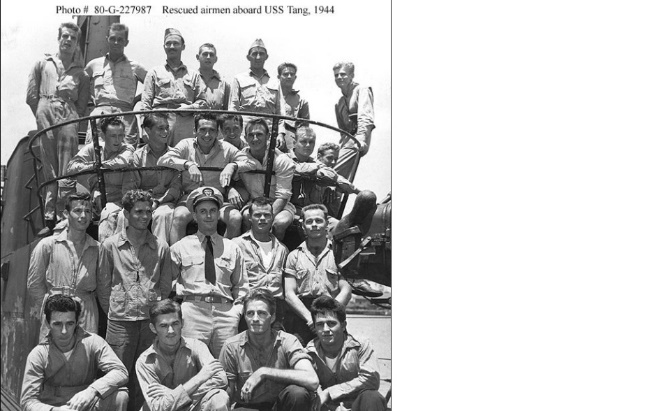
Tang’s second patrol began on 16 March 1944. She made a number of contacts but could not attack. Then she was ordered to lifeguard duty around Truk. There she rescued 22 aviators: the crew of a Kingfisher seaplane plus the men who had already been picked up by the plane. Tang was ordered to end the patrol at Pearl Harbor. O’Kane’s insights into lifeguard communications contributed to increased submarine safety during lifeguard duty and possibly greater success since they didn’t need to submerge as often.
Her third war patrol began on 8 June 1944. On this patrol, Tang set the record for the most ships confirmed sunk in one patrol. This was in the areas of the East China Sea and the Yellow Sea. On 24 June, she attacked a convoy of six marus escorted by 16 warships. In a surface attack, Tang sank four of the marus. On 30 June, she sank an unescorted cargo ship and then two more small ships on 1 July. Two more followed on 4 July. The last sinking was on 6 July and Tang was again out of torpedoes. She had sunk 10 ships for 39,100 tons on a single patrol.
Tang began her fourth patrol on 31 July 1944 headed for the area off Honshu. On 10 August, she fired three torpedoes at a tanker but missed. The next day she sank a cargo ship with one torpedo. She claimed damage to another. A depth charge attack lasted 38 minutes but Tang evaded. Afterwards, there was no sign of the ship and escorts were rescuing survivors, but Tang did not get credit. She then sank a patrol yacht with her deck guns. On 22 August, she sank a small freighter and on the next day she sank a large transport. On 25 August, Tang sank a small tanker and its escort with her last torpedoes. This patrol ended on 1 September 1944 at Pearl Harbor.
Tang was lost on her fifth war patrol. JANAC originally credited her with 24 sinkings for 93,824 tons total for her WW2 service. According to Wikipedia, this has been revised to 33 ships for 116,454 tons, placing O’Kane first in the list of most successful U. S. submarine captains. These numbers are in addition to O’Kane’s successes on USS Wahoo (SS-238) as XO and approach officer under CDR Morton.
We did not realize until the end of the war that Darter, Shark II and Tang were all lost on the same day.
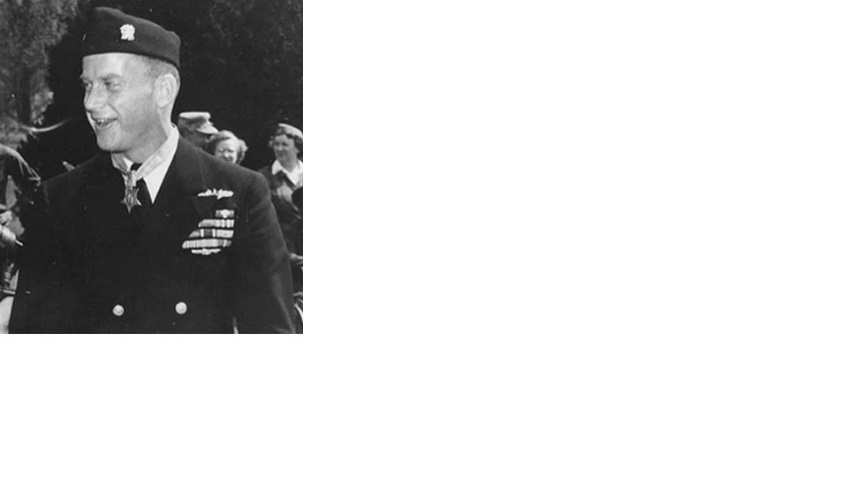
CDR O’Kane was awarded the Medal of Honor for his last two engagements.
Tang was awarded Presidential Unit Citations for patrols 1, 2, 3, 4 and 5.
NOTE: ADM O’Kane’s cribbage board is on loan to the oldest attack submarine in the U. S. fleet. When that boat is decommissioned, the cribbage board is transferred to the next oldest attack boat.
Tang’s second patrol began on 16 March 1944. She made a number of contacts but could not attack. Then she was ordered to lifeguard duty around Truk. There she rescued 22 aviators: the crew of a Kingfisher seaplane plus the men who had already been picked up by the plane. Tang was ordered to end the patrol at Pearl Harbor. O’Kane’s insights into lifeguard communications contributed to increased submarine safety during lifeguard duty and possibly greater success since they didn’t need to submerge as often.
Her third war patrol began on 8 June 1944. On this patrol, Tang set the record for the most ships confirmed sunk in one patrol. This was in the areas of the East China Sea and the Yellow Sea. On 24 June, she attacked a convoy of six marus escorted by 16 warships. In a surface attack, Tang sank four of the marus. On 30 June, she sank an unescorted cargo ship and then two more small ships on 1 July. Two more followed on 4 July. The last sinking was on 6 July and Tang was again out of torpedoes. She had sunk 10 ships for 39,100 tons on a single patrol.
Tang began her fourth patrol on 31 July 1944 headed for the area off Honshu. On 10 August, she fired three torpedoes at a tanker but missed. The next day she sank a cargo ship with one torpedo. She claimed damage to another. A depth charge attack lasted 38 minutes but Tang evaded. Afterwards, there was no sign of the ship and escorts were rescuing survivors, but Tang did not get credit. She then sank a patrol yacht with her deck guns. On 22 August, she sank a small freighter and on the next day she sank a large transport. On 25 August, Tang sank a small tanker and its escort with her last torpedoes. This patrol ended on 1 September 1944 at Pearl Harbor.
Tang was lost on her fifth war patrol. JANAC originally credited her with 24 sinkings for 93,824 tons total for her WW2 service. According to Wikipedia, this has been revised to 33 ships for 116,454 tons, placing O’Kane first in the list of most successful U. S. submarine captains. These numbers are in addition to O’Kane’s successes on USS Wahoo (SS-238) as XO and approach officer under CDR Morton.
We did not realize until the end of the war that Darter, Shark II and Tang were all lost on the same day.
CDR O’Kane was awarded the Medal of Honor for his last two engagements.
Tang was awarded Presidential Unit Citations for patrols 1, 2, 3, 4 and 5.
NOTE: ADM O’Kane’s cribbage board is on loan to the oldest attack submarine in the U. S. fleet. When that boat is decommissioned, the cribbage board is transferred to the next oldest attack boat.
Submarine Photo

Captain Photo
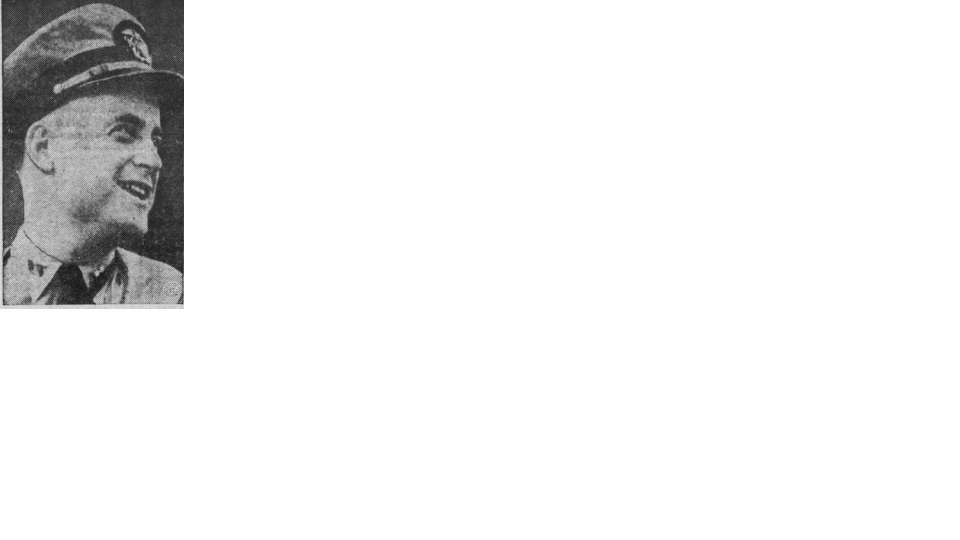
CDR Richard (Dick) O’Kane